Embroidery Machine Trade Show Comparison 2025: Practical Tips for Picking the Right Equipment
This post contains affiliate links. As an Amazon Associate, Latest Embroidery earns from qualifying
purchases, at no extra cost to you. Learn more.
Are you ready to choose the best embroidery machine in 2025? With the rapid growth of embroidery technology, industry trade shows have become essential for sourcing the latest equipment, software, and accessories. From eco-friendly threads to textured effects, 2025 is shaping up to be an exciting year for embroidery innovators. Attendees can exploit hands-on demos, gain insights from industry experts, and evaluate new features like advanced software updates and sustainable materials, crucial for making informed purchasing decisions. According to recent industry reports, the global embroidery market is set to surpass $3.7 billion in value by the end of 2025, reflecting a booming sector that’s constantly evolving. Whether you’re a hobbyist or a professional, understanding what new trends and innovations are on display at trade shows will help you identify equipment that offers the best balance of performance and cost-effectiveness. Ready to navigate this vibrant marketplace and find the perfect fit? Keep reading for practical tips, expert advice, and a comprehensive comparison of the top machines showcased for 2025.
What the 2025 Embroidery Trade Shows Reveal for Buyers
Short on time? If you only take one thing from this guide: Brother SE700 — the machine we point most beginners to — touchscreen, wireless transfer, and it sews as well as embroiders.
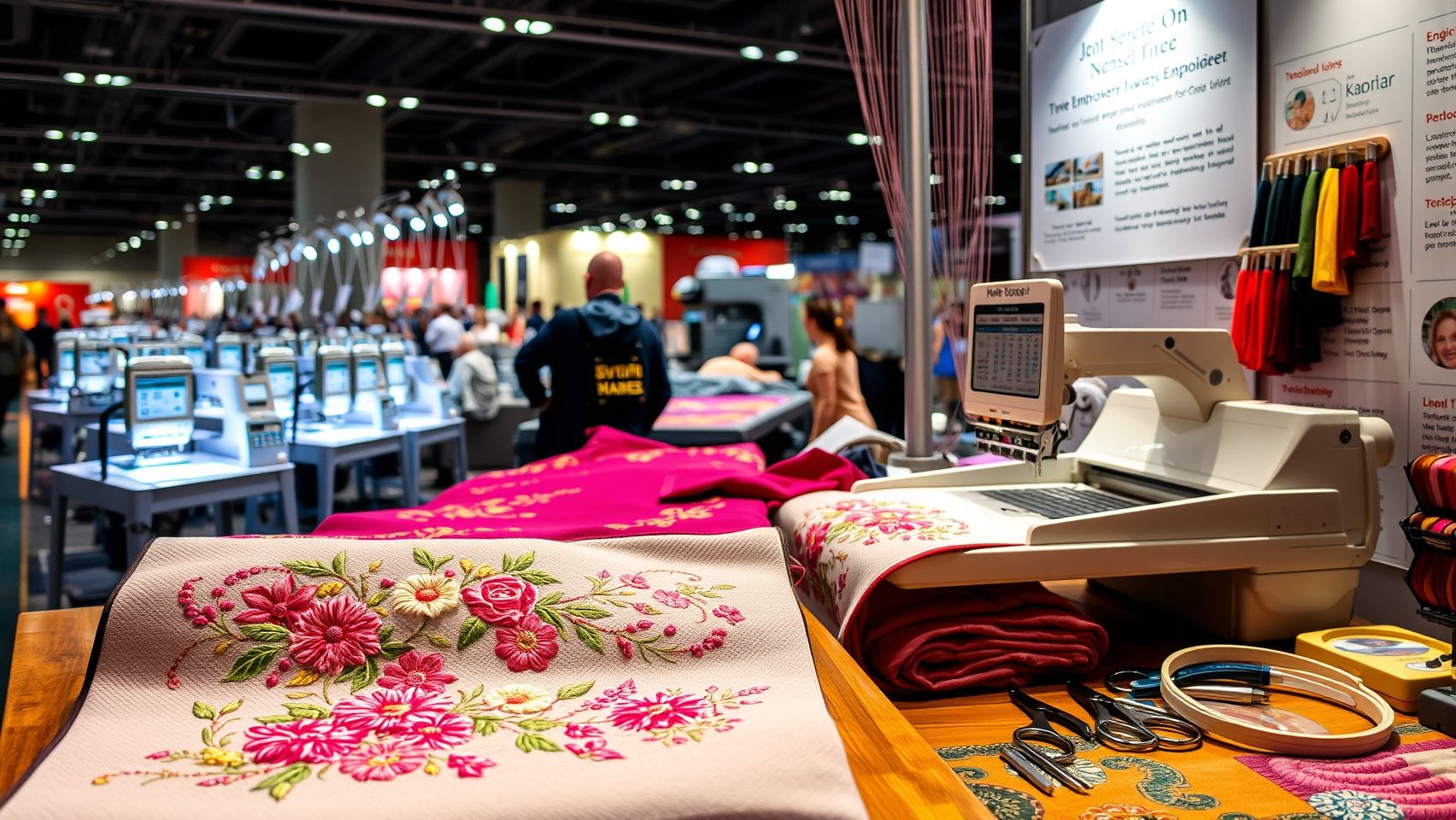
As the embroidery industry prepares for 2025 trade shows, attendees can expect a wealth of innovations and emerging trends shaping the market. Major events like the ISS Expo and regional industry-specific shows are showcasing cutting-edge equipment, technical advancements, and sustainable practices. These showcases provide an invaluable opportunity for buyers to assess new machinery, compare features, and gather critical insights to inform their purchasing decisions.
In 2025, the focus is heavily on technological enhancements such as automatic tension adjustment, larger hoops (up to 10.25″ x 6″), and software compatibility with platforms like StitchArtist 3 and Embrilliance 2025 versions. These innovations aim to improve productivity, precision, and design flexibility, with a keen emphasis on eco-friendly materials and textured techniques such as tufting and stumpwork, employed by around 68% of industry practitioners.
Actionable Strategies for Trade Show Success
To maximize your trade show experience, it’s essential to plan your visit strategically. Use the event floor plan to prioritize booths featuring major brands like Brother, Bernina, Janome, and emerging companies. Focus on demos of machines with the latest features, such as automatic tension systems, spacious hoops, and advanced software integration. Educational sessions on sustainable materials and 3D embroidery effects can deepen your understanding of current trends and their practical applications.
Create a detailed checklist of key features for comparison:
- Stitch quality
- Machine speed
- User interface ease of use
- Accessory options and expandability
Gather brochures, record demo videos, and seek expert opinions during the event. Post-show, these materials will assist in a thorough evaluation process, enabling you to compare models based on performance, innovation, and ROI. With over 100 countries utilizing platforms like Hatch for their robust resizing and fabric preview features, understanding global industry standards can also influence your buying decision.
Additionally, recent developments include the launch of new digitizing software such as StitchArtist 3 and Embrilliance 2025, which are revolutionizing design workflows. Metallic threads, glow-in-the-dark options, and tactile embellishments are becoming more prevalent, offering new creative horizons. Staying informed through these insights allows buyers to select equipment that not only meets current needs but also positions them for future growth in the evolving embroidery landscape.
Step-by-Step: How to Evaluate Equipment at Trade Shows
Attending an embroidery machine trade show is an excellent opportunity to assess the latest models firsthand. To make an informed decision, it’s crucial to follow a structured process that allows you to compare features effectively, see machines in action, and evaluate their real-world performance. This guide walks you through practical steps for evaluating embroidery machines during trade shows, focusing on hands-on testing, feature comparison, and vendor interactions.
Prepare a Demo Worksheet
Before visiting booths, create a detailed demo worksheet that lists critical features necessary for your embroidery projects. Include the hoop size needed for your typical work, desired stitch resolution for detail accuracy, stabilization options for different fabrics, and thread compatibility, especially if you plan to use metallic or iridescent threads. Having this checklist ensures you systematically evaluate each machine and don’t overlook important specifications.
Request Live Demonstrations
Seek vendors’ live demonstrations with sample projects such as logo stitching or textured embroidery effects. Observing a machine in action reveals its capabilities in real-time, helping you assess stitch quality, speed, and handling of complex designs. Pay attention to how efficiently the machine performs these tasks and whether it can easily recreate intricate details, which is vital for professional-quality embroidery.
Test Machine Setup and Software Compatibility
Load your design files via USB or Wi-Fi to test the ease of setup and software compatibility. Verify if the machine supports your preferred design formats and if its interface allows real-time editing. With models like the Brother SE1800, Bernina B770 QE, and Janome Horizon Memory Craft, check for features such as large touchscreen displays and seamless design transfer capabilities that facilitate smooth workflow.
Evaluate Mechanical and Acoustic Features
Assess ease of threading, tension adjustments, and noise levels. Use actual threads, including metallic or iridescent varieties, to confirm tension stability and thread path simplicity. Additionally, listen to the machine’s noise during operation; professionals often cite speed and noise level feedback, which can impact your workspace comfort.
Record Performance and Costs
Take notes on stitch speed, quality on different fabrics, and finishing options like automatic thread cutting. Compare pricing, warranty coverage, and on-site training or support services. For instance, the Bernina 770 QE Plus is priced between $7, 999 and $11, 399 and includes an embroidery module, making it a premium option for serious enthusiasts and professionals.
Comparison of Popular Models
By following these steps, you will gain comprehensive insights into each model’s strengths and weaknesses. Combining hands-on testing with detailed feature comparisons allows you to select an embroidery machine that best fits your specific needs, ensuring your investments are well-informed and confidently made.
Tools, Software, and Accessories for Effective Trade Show Evaluation

Choosing the right embroidery equipment for a trade show involves more than just comparing machine specifications. Equipping yourself with the proper tools, advanced software, and high-quality accessories can significantly enhance your assessment of each machine’s capabilities and facilitate seamless demonstrations. This approach helps you make informed decisions based on real-world testing and visualizations, ensuring you select equipment that aligns with your operational needs and creative goals.
Investing in a comprehensive toolbox enables you to evaluate embroidery machines effectively. From digital tools for recording and comparing demos to essential accessories for testing different fabric effects, a well-prepared setup puts you ahead in understanding each machine’s potential. Below are detailed suggestions for tools, software, and accessories that will support your evaluation process at the 2025 trade show.
Embroidery Software Options for Trade Show Demos
Popular embroidery software like StitchArtist, Embrilliance, and Hatch Designer are essential for previewing designs, resizing, and fabric simulations during demos. The latest versions offer real-time fabric previews that simulate textures and thread effects, helping you assess their accuracy in visualizing finished projects.
Embrilliance, for example, provides a free library for design access and comprehensive tutorials that assist beginners in quickly adapting to the software. Hatch Designer offers a 30-day free trial, allowing you to evaluate its advanced features such as automatic editing and multi-hooping support. Comparing feature Setups:
Essential Accessories for Trade Show Testing
To effectively evaluate embroidery machines during demos, consider bringing high-quality accessories. An assortment of hoops, such as a 10.25″ x 6″ size, provides flexibility for various design projects and ranges from around $30 to $150 depending on material and brand. Quality bobbins and a selection of metallic and iridescent threads allow you to test different thread effects, especially since approximately 68% of professionals prefer high-end stabilizers for textured effects.
Stabilization products, including tear-away, cut-away, and water-soluble stabilizers, help you assess finished quality under different settings. Additionally, portable lighting ensures clear visibility during demos, which is vital for demonstrating detail work or textured embroidery. For stabilization testing, specialized kits and sample fabrics enable side-by-side comparisons of machine performance on various materials. This setup delivers a practical, hands-on approach for identifying the optimal equipment and accessories suited to your embroidery projects.
Comparing Machine Features and Costs Effectively
Choosing the right embroidery machine for trade shows in 2025 requires a thorough comparative analysis of key features, price points, and performance metrics. A detailed comparison chart can help identify which models offer the best return on investment (ROI). When evaluating machines, focus on specifications such as stitch resolution, hoop size, speed, and software compatibility, as these directly influence quality and productivity.
Creating a feature-by-feature comparison chart involves listing these specifications side-by-side for each model. For instance, stitch resolution is crucial for detailed embroidery work and can range from 200 to 600 stitches per inch. Hoop size determines the maximum embroidery area, with larger hoops ideal for large projects. Speed, measured in stitches per minute, varies between models and affects production efficiency, especially for commercial use. Software compatibility concerns whether the machine supports popular embroidery design platforms, impacting ease of use and versatility.
Building a Comparative Chart
A typical comparison table includes models like Brother SE1800, Bernina B770 QE, and Janome Horizon. For example, the Brother SE1800 offers a 6 x 10-inch hoop, 200+ built-in designs, and operates at 850 stitches per minute, highlighting affordability but limited advanced features. Bernina’s B770 QE provides a larger hoop (9 x 13 inches), over 800 built-in designs, and superior stitch resolution, but at a significantly higher price. Janome Horizon features extensive software compatibility, large embroidery area, and automatic tension adjustment, making it suitable for professional work but with a premium price point.
Evaluating Pros and Cons
For cost-effective options, Brother excels with affordability, making it a suitable choice for beginners or hobbyists seeking decent functionality without breaking the bank. Conversely, Bernina provides high-end quality and extensive features that justify its higher price, targeting serious enthusiasts and small business users. Janome’s advanced software integration and large embroidery area make it ideal for professional environments but require substantial investment.
Cost-benefit analysis reveals that machines with automatic thread cutting, large hoops, and included design libraries deliver higher ROI, especially when performance benchmarks like stitch quality on textured fabrics and speed are considered. Recent market trend data indicates that models within the $2, 500–$4, 000 range tend to offer optimal balance of features and price, making them the preferred choice for trade show professionals in 2025.
Conclusion
As the embroidery industry continues to evolve in 2025, conducting a thorough evaluation at trade shows is essential for making informed equipment decisions. Hands-on testing, comparison tools, and strategic planning empower you to identify machines that align perfectly with your specific needs, budget, and future trends such as eco-textures and tactile effects. Embrace a proactive approach by preparing a customized evaluation checklist and setting clear goals before attending trade shows. This will enable you to focus on the most relevant technologies and innovations that can maximize your return on investment.
Remember, follow-up is key. After the event, compile detailed comparisons of the equipment you tested and observed to select the best embroidery machine for your business. Empower yourself with this knowledge, and you’ll be ready to make confident choices that will keep your embroidery venture competitive and thriving in 2025 and beyond. Get ready to turn insights into success, your perfect embroidery machine awaits!