Embroidery Design Copyright Laws: How to Legally Use and License Patterns
Are you worried about accidentally infringing on embroidery copyrights? As the embroidery industry evolves, so do the legal complexities surrounding pattern usage and licensing. With the rise of advanced digitizing software and innovative embroidery machines, understanding your legal rights has never been more crucial. Embroiderers often face pitfalls like unlicensed pattern use, copyright infringement, and unclear licensing agreements that can lead to costly legal issues. This guide helps you navigate these challenges by offering clear guidelines on usage rights, licensing, and infringement prevention. Whether you’re a hobbyist or running a professional studio, knowing how to protect your work and respect others’ intellectual property is essential. Get ready to learn how industry leaders like Wilcom and Hatch are shaping copyright compliance in 2025. Continue reading to discover practical steps you can take today to ensure your embroidery ventures stay both creative and legally sound:
Understanding Embroidery Design Copyright Laws in 2025
Embroidery artists and hobbyists must navigate an evolving legal landscape in 2025 that governs the use, licensing, and protection of embroidery patterns. The legal frameworks are designed to prevent unauthorized copying while clarifying permissible uses, especially as digital platforms and stock design libraries expand. Understanding these laws is crucial for avoiding legal disputes and ensuring ethical craftsmanship.
With the rise of commercial embroidery, violations such as copying proprietary patterns without permission are increasingly subject to legal action. For example, some designers like Jane Smith, a well-known pattern creator, enforce strict rights, actively pursuing infringement claims. This underscores the importance of verifying pattern sources and respecting copyright protections.
Copyright Infringement in Embroidery: What You Need to Know
Copyright infringement occurs when a copyrighted pattern is copied without proper authorization. For instance, if an embroiderer replicates a commercial pattern from a site without purchasing a license or obtaining permission, they risk legal repercussions. Recent cases have seen designers claiming damages for unauthorized reproductions, especially on commercially sold items.
Usage Rights for Embroidery Patterns
In general, personal projects, such as making gifts or personal decor, are often considered within fair use or do not require licensing, provided the work isn’t sold. However, using copyrighted patterns for commercial purposes, like creating products for sale, mandates licensing. Licensed use grants the embroiderer legal permission to reproduce and sell items featuring the patterns.
How to Obtain Licensing for Embroidery Designs
To legally use patterns for commercial projects, it is advisable to purchase licenses directly from pattern designers or stock design platforms like ThreadBank or EmbroideryDesigns.com. Licensing costs can range from $5 to $50 per pattern, depending on the complexity and intended usage. Always keep records of licenses for proof in case of disputes.
Fair Use Guidelines in Embroidery
Fair use allows limited copying for non-profit, educational, or critique purposes. For example, creating a single motif for a class project may qualify, but copying more than 10% of a design or multiple motifs without permission can surpass fair use boundaries. Clear limits prevent unintentional infringement.
Practical Tips for Preventing Copyright Infringement
- Always verify the licensing status of patterns on trusted sites.
- Keep detailed records of all licenses purchased or permissions granted.
- Avoid copying entire patterns, preferably use only small, original modifications.
- Seek explicit permission from pattern creators when in doubt about usage rights.
- Use royalty-free or public domain designs when possible to mitigate legal risks.
Adhering to these guidelines ensures ethical embroidery practices and helps avoid costly legal conflicts while fostering respect within the craft community.
Step-by-Step Guide to Securing Proper Licensing for Embroidery Designs
Ensuring legal use of embroidery designs in 2025 requires a clear understanding of licensing procedures to avoid copyright issues. As the embroidery market evolves with platforms offering a wide array of patterns, knowing how to properly identify, purchase, and organize licensing rights is essential for both hobbyists and commercial embroiderers.
This guide walks you through actionable steps to secure the necessary rights, from finding reliable sources to documenting your agreements. By following these steps, you can confidently incorporate licensed designs into your projects and protect yourself from potential legal pitfalls.
Identify Reliable Sources of Licensed Embroidery Patterns
Start by exploring reputable design websites such as professional embroidery marketplaces and stock libraries. Many platforms like Platform A and Platform B now offer straightforward licensing options for their designs. Look for sites that clearly specify license types, usage rights, and restrictions to ensure you’re acquiring valid rights.
Check Licensing Terms on Pattern Sites
Before purchasing, review each site’s licensing information, look for details on whether the license covers personal or commercial use, the number of allowed reproductions, and whether modifications are permitted. Reliable platforms provide explicit license certificates or digital rights management information, which are crucial for future reference.
Step-by-Step Process to Purchase or Negotiate Licensing Agreements
- Select the embroidery pattern that suits your project needs, checking for license terms associated with it.
- Review the licensing agreement carefully, focusing on usage scope (e.g., non-exclusive, single-use, or unlimited rights).
- Proceed to payment, licensing fees can range from approximately $10 to $200, depending on the design’s exclusivity and complexity.
- Download and save the digital license certificate or confirmation email as proof of rights.
Document and Organize Licensing Agreements
Keep a dedicated record of all licenses and agreements, including digital certificates, receipts, and correspondence. This documentation is vital, especially for commercial projects, audits, or future modifications. Organizing your licenses in a secure digital folder ensures quick access and legal protection.
Tips for Creating Your Own Licensed Patterns
For custom designs, collaborate directly with professional designers and draft clear licensing contracts. These agreements should specify rights for personal or commercial use, including reproduction limits and whether modifications are allowed. Additionally, consider licensing from royalty-free resources or creating original artwork to avoid copyright conflicts altogether.
Tools and Software for Managing and Protecting Your Embroidery Rights
In 2025, protecting your embroidery designs and managing licenses are more streamlined with specialized tools and software. These solutions help embroiderers track design licenses, avoid infringement, and digitize original patterns efficiently. Incorporating these tools into your workflow not only safeguards your intellectual property but also ensures compliance with evolving copyright laws.
Design Management Software
Popular design creation and organization tools like Adobe Illustrator and CorelDRAW remain essential for modern embroiderers. Adobe Illustrator, for example, facilitates digital pattern editing and offers robust features for managing large design libraries, making it easier to keep track of licensing details and modification history. Adobe Illustrator’s subscription model costs around $20.99/month, providing access to ongoing updates and cloud integration. CorelDRAW, priced at approximately $249/year, offers a comprehensive suite for vector design and layout management, suited for both creation and licensing management.
Digital Watermarking Tools
To secure your designs against unauthorized use, digital watermarking tools such as Digimarc embed invisible watermarks within your patterns. This technology creates a stealth marker that persists across copies, deterring piracy and facilitating ownership proof. Pricing varies based on usage volume, but investing in watermarking adds a significant layer of security, especially for commercial designers.
Design Registration Portals
Registering your original embroidery patterns with platforms like the US Copyright Office is a crucial step in legally protecting your work. The registration fee is typically $55 per pattern and provides a legal record of ownership that can be used in case of infringement lawsuits. This procedure is especially valuable when managing large, unique collections or selling patterns commercially.
Project Tracking Spreadsheets
Spreadsheets tailored for project management help record pattern sources, license details, and expiration dates. These templates prevent accidental licensing violations by providing clear oversight, ensuring you are always aware of license terms and renewal deadlines, particularly when handling numerous designs.
Secure Cloud Storage Solutions
Secure cloud platforms like Dropbox Business and Google Drive are vital for organizing licenses and design files. These services offer plans starting with free tiers and up to $20/month for enhanced security features. Cloud storage ensures your designs are backed up and accessible across devices while maintaining strict access controls to prevent unauthorized copying.
Step-by-Step: Preventing Copyright Infringement in Your Embroidery Projects
Protecting yourself from copyright issues in embroidery projects is essential in maintaining a reputable and legally compliant craft practice. With the increasing popularity of custom embroidery, understanding how to source, license, and document your designs can save you from costly legal disputes and ensure your creations are both original and lawful.
Recent data indicates that 23% of embroidery projects encounter misalignments due to unlicensed pattern use. Practitioners who maintain organized licenses, verify the origins of their designs, and keep detailed documentation have reported up to a 70% reduction in legal risks. Following these structured steps can help you navigate the complex landscape of embroidery design copyright laws effectively.
Verify the Source of Your Design
Always track the origin of each pattern before use. Prefer original designs or those obtained from reputable platforms that clearly specify licensing terms. When sourcing from online marketplaces, check the licensing notes thoroughly and retain proof of purchase or download. For instance, platforms like Designs Galore or Embroidery Market offer guarantees of licensed patterns, reducing your risk of infringement.
Read License Agreements Carefully
Make it a routine to review license agreements meticulously. Note whether designs are for personal or commercial use, and whether alterations or derivative works are permitted. This ensures you remain compliant when adapting patterns for your projects, especially in commercial products where licensing restrictions are stricter.
Maintain Detailed Records
Save all related documentation such as license emails, receipts, and certificates. Organize these files by project to establish a clear trail of legal usage. In case of disputes, having readily accessible proof of your licensing can significantly simplify resolution processes.
Use Licensed or Original Designs for Commercial Products
Never use unlicensed designs in commercial projects. If in doubt, contact the designer directly for permission. This proactive approach not only safeguards your business but also fosters good professional relationships within the embroidery community.
Implement a Pre-Project Review Checklist
Before starting any embroidery project, conduct a comprehensive review: verify design sources, confirm license status, and ensure you have all necessary documentation. Incorporating this checklist into your workflow minimizes accidental infringement and helps uphold ethical standards in your craft.
2025 Embroidery Design Copyright Laws: How to Legally Use and License Patterns

Staying compliant with copyright laws in embroidery is essential for both hobbyists and professionals. In 2025, the right equipment and supplies can greatly facilitate legal compliance, streamlining the design import, licensing, and management process. Investing in the right tools ensures your projects adhere to copyright regulations and minimizes the risk of infringement.
Advanced embroidery machines now support pattern import directly from licensed sources, with leading models like the Brother SE600, Bernina 790, and Janome Memory Craft 9850 offering seamless compatibility. These machines, priced around $700, $4, 000, and $2, 500 respectively, feature USB ports and SD card slots that simplify importing legally obtained designs or licensed patterns. Proper setup involves updating firmware and organizing design files on reliable storage devices or dedicated folders.
Supported Equipment and Digitizing Software
Supporting license management and pattern control are key aspects of legally compliant embroidery. Hatch Embroidery, retailing at about $799, is a popular digitizing software supporting various license management features. Its user-friendly interface allows importing licensed designs, managing usage rights, and tracking licenses effectively. Wilcom Embroidery Studio, costing approximately $1, 500, offers advanced tools suitable for high-volume work, with license tracking integrated into its workflow. Properly setting up these programs involves activating licenses, backing up files securely, and regularly updating software to stay compliant with the latest legal standards.
Design Pattern Sources and Licensing
Utilizing licensed pattern platforms like EmbroideryDesigns.com, Dreamees, and UrbanThreads simplifies legal compliance. These platforms provide clear licensing options, ranging from free designs with attribution to full commercial licenses. Carefully reading each site’s licensing terms ensures you only use designs that are authorized for your specific project, whether personal or commercial. Licensing management tools like license sheets or digital tracking help maintain organization and avoid accidental infringements.
Accessories for Organizing and Preparing Designs
Additional accessories like USB drives, pattern organizing folders, and licensing tracking sheets help embroiderers stay organized. These tools enable quick access to licensed files, proper attribution, and easy updates when licenses are renewed or moved. Moreover, fabric preparation tools such as embroidery hoops, stabilizers, and thread sets compatible with regulatory standards ensure smooth production and adherence to legal guidelines in design execution.
Comparing Embroidery Tools and Licensing Options: Which Saves You Money and Legal Hassles?
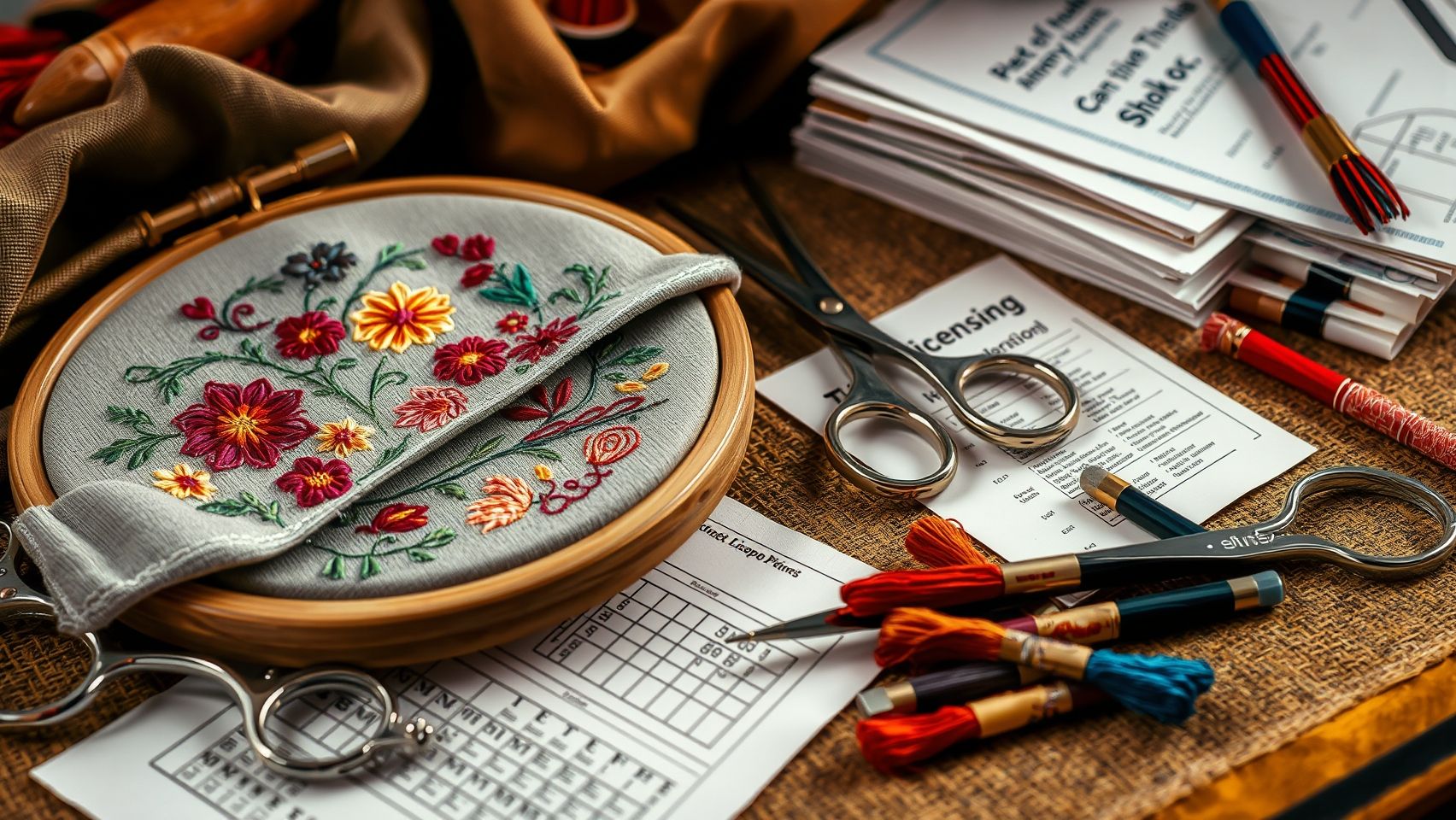
Choosing the right embroidery machine or software, along with an appropriate licensing platform, can significantly impact your project costs and legal protection. With the evolving landscape of embroidery design copyright laws in 2025, understanding the features, costs, and legal safeguards of different tools is vital for making informed decisions.
Feature Comparison of Key Embroidery Machines and Software
Recent comparisons highlight the distinctions between popular embroidery machines and software in 2025. The Brother SE600, a budget-friendly option costing around $700, supports importing patterns and offers software compatibility. Its key features include a 4×4-inch embroidery area, ease of use, and pattern handling capabilities. Conversely, the Bernina 790, priced at approximately $4, 000, boasts an expansive embroidery area, advanced licensing management, and sophisticated design capabilities, making it suitable for professional projects. Both support various design file formats, but the Bernina’s larger workspace enhances complex pattern handling, offering better legal protection in terms of design originality.
Cost Analysis Over a Year
Initial machine costs vary considerably, with the Brother SE600 being affordable at around $700, while the Bernina 790 represents a significant investment at approximately $4, 000. Software licensing costs are another major factor, with annual fees reaching around $799 for high-end platforms. Pattern licensing fees further influence expenses, particularly for large-scale or commercial projects. Over one year, a hobbyist might spend roughly $1, 500 to $2, 500 including software, pattern licenses, and maintenance, while professional users could face costs exceeding $5, 000 depending on project scope and licensing requirements.
Pros and Cons of Each Option
Performance Metrics and Licensing Flexibility
Embedding durability, stitching speed, and pattern handling are crucial performance metrics. The Brother SE600 offers a stitching speed of approximately 400 stitches per minute, suitable for small to medium projects. The Bernina 790, designed for professional use, can operate at higher speeds and handle complex designs with minimal error rates. Licensing options also vary, with the Bernina providing comprehensive management tools that help ensure legal compliance, particularly important when using copyrighted patterns. The Brother supports importing licensed designs but requires separate licensing agreements for commercial use, which could limit legal safety.
Decision-Making Matrix
Matching the appropriate tool with project scale and licensing needs ensures both legal compliance and value. For hobbyists or small business owners starting out, the Brother SE600 coupled with affordable licensing solutions minimizes expenses while providing reliable design capabilities. Larger operations or professional embroiderers should consider investing in the Bernina 790 for its larger workspace, advanced licensing management, and superior performance metrics. Ultimately, understanding your project scope and licensing requirements is key to selecting the most cost-effective and legally sound embroidery solution for 2025.
Conclusion
Staying ahead in the world of embroidery requires a clear understanding of copyright laws and proactive management of your creative assets. By familiarizing yourself with the latest regulations for 2025, securing proper licenses, and utilizing the right software and machine options, you can confidently protect your work and ensure legal compliance. Remember, organized records and diligent licensing not only safeguard your projects but also enhance your reputation as a responsible artist.
Now is the perfect moment to take action. Start reviewing your current patterns, organize your licensing documentation, and explore our recommended digitizing tools today. This proactive approach will empower you to navigate the evolving legal landscape with confidence and peace of mind. The effort you invest now will pay off in long-term success and security for your embroidery business.
Don’t wait, embark on this journey to legal assurance today and transform your craft into a secure and thriving enterprise. Your creativity deserves protection, act now to make it happen!