What Is Tambour Embroidery? A Clear Explanation
This post contains affiliate links. As an Amazon Associate, Latest Embroidery earns from qualifying
purchases, at no extra cost to you. Learn more.
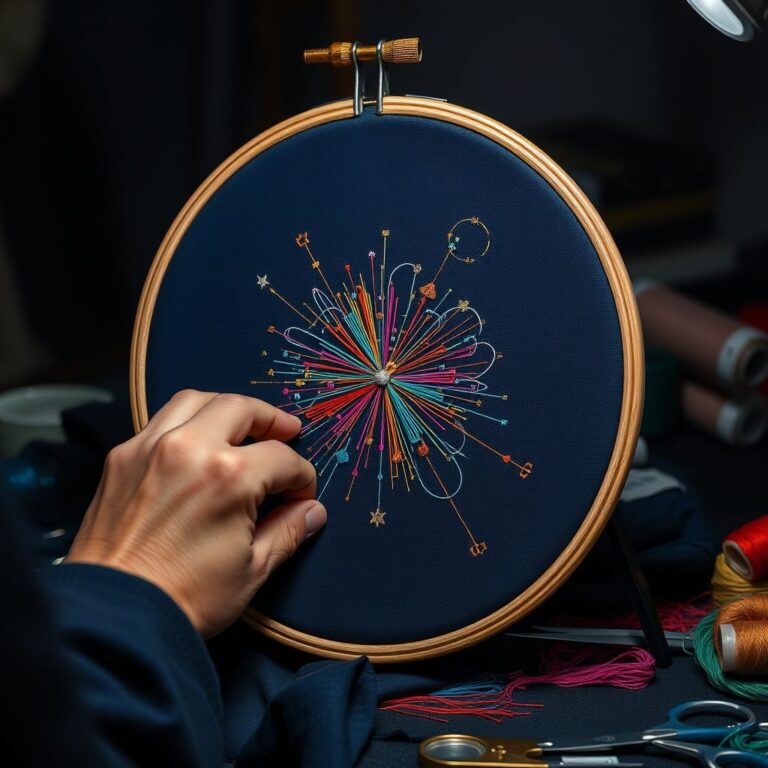
Tambour embroidery is a technique that uses a small hook instead of a needle to make a chain stitch, working from the top of the fabric while the thread is held underneath. The fabric is stretched drum-tight in a frame, the hook punches down through it, catches a loop of thread from below, and pulls it back up. Repeat that and you get a continuous chain of stitches, far faster than any needle can manage.
The name comes from the French word for drum, because the taut fabric in its round frame looked like a drum head. If you have heard of Luneville embroidery, that is the same technique named after the town in France where it became a speciality.
How it differs from ordinary embroidery
Short on time? If you only take one thing from this guide: Tambour hook starter set — the one specialist tool the technique depends on.
View current Amazon listing → or see all tambour & beading picks ↓
Almost everything about it is inverted compared to hand embroidery with a needle.
| Needle embroidery | Tambour | |
|---|---|---|
| Tool | Needle with an eye | Hook with a barb, like a tiny crochet hook |
| Thread position | Carried through by the needle | Held below the fabric, fed by your other hand |
| You work from | The front | The front, but for beading you work from the back |
| Speed | One stitch per pass | Much faster once the rhythm clicks |
| Frame | Hoop optional | Essential, and it must free both hands |
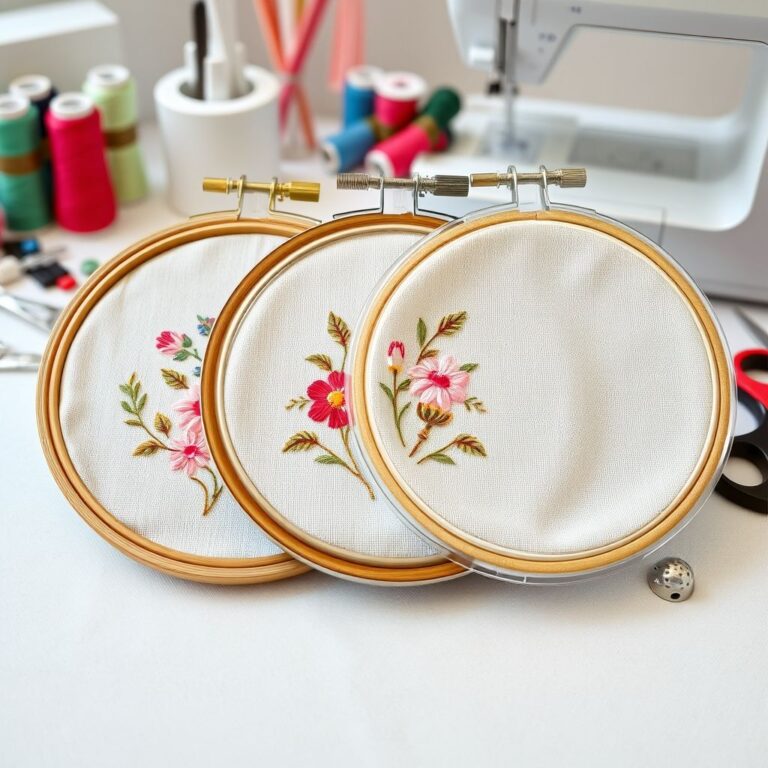
That last row is the one beginners underestimate. Tambour needs a stand-mounted frame because one hand stays above the fabric working the hook and the other stays below managing the thread. A hand-held hoop makes the technique physically impossible.
What it is actually used for
Tambour survives today mainly because of one thing it does better than anything else: attaching beads and sequins at speed. Couture houses use it for exactly this. Working from the reverse of the fabric, you thread beads onto the working thread and lock each one down with a chain stitch. A skilled worker can bead an entire panel in a fraction of the time it would take stitching them on individually.
Beyond beadwork it is used for fine chain-stitch outlines and fills on sheer fabrics, whitework and net, and for the dense surface texture you see on bridal and evening wear.
The tools you need
- A tambour hook with interchangeable needles in a few sizes. The hook is tiny and the barb is what catches the loop, so a damaged tip ruins the stitch.
- A stand-mounted frame, either a slate frame or a dedicated tambour frame, that holds the fabric drum-tight and leaves both hands free.
- An open, stable ground fabric. Silk organza and tulle are the classics. Dense cotton will blunt the hook and split the yarn. We cover this in detail in our guide to the best fabric for tambour embroidery.
- Fine thread that runs smoothly, plus beads or sequins if you are working the couture version.
Is it hard to learn?
The individual motion is simple. Getting the hook to catch reliably, keeping the loop tension even, and not snagging the fabric on the way back up is what takes practice. Most people describe a frustrating first few hours followed by a fairly sudden click, after which it becomes rhythmic and quick.
The two things that cause most early failures are not technique at all. They are a frame that is not tight enough, and a fabric that is too dense for the hook. Fix those and the learning curve gets much shorter. Our full tambour embroidery guide walks through hook grip, the practice sequence and the common faults.
Frequently Asked Questions
What is tambour embroidery?
Tambour embroidery is a technique that uses a small barbed hook rather than a needle to produce a chain stitch. The fabric is held drum-tight in a frame, the hook passes down through it and catches a loop of thread held underneath, then draws it back up. Repeating this creates a continuous chain.
What is the difference between tambour and Luneville embroidery?
They are the same basic hook-and-chain-stitch technique. Luneville refers to the French town where the method was refined for couture beadwork, and the term is usually used when the work is beaded and done from the reverse of the fabric.
Do you need a special hook for tambour embroidery?
Yes. A tambour hook has a fine barbed tip that catches the thread loop, and the needles are interchangeable in different sizes to suit the thread and fabric. A crochet hook will not work reliably because the barb shape is different.
Can you do tambour embroidery on any fabric?
No. The hook has to pass between the threads of the weave, so the fabric must be open and stable. Silk organza and tulle are the traditional choices. Dense wovens such as quilting cotton and denim will split under the hook and blunt the tip, and anything with stretch cannot hold the required tension.
Is tambour embroidery faster than hand beading?
Considerably, once you have the rhythm. Beads are pre-strung onto the working thread and locked down one chain stitch at a time, which is why couture workrooms use it for beading whole panels rather than sewing beads on individually.