Best Fabric for Tambour Embroidery: What Works and What Fails
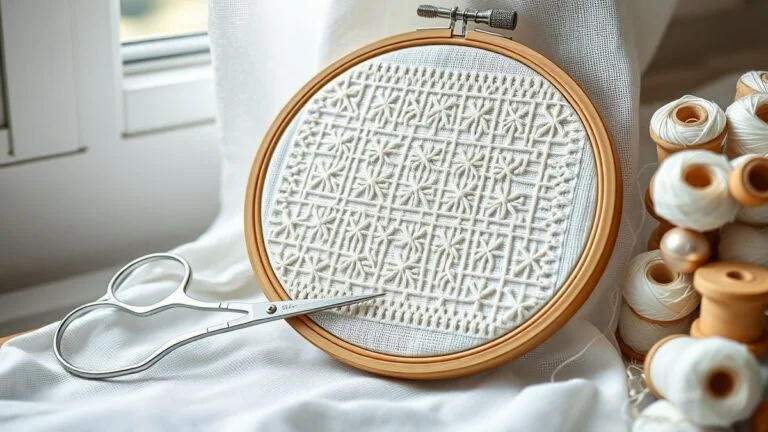
Short answer: for a first tambour sampler, start with a small piece of non-stretch silk organza. Its transparency helps you see the hand feeding the thread underneath. Fine tulle is another option, but test its stretch and hole size before adding beads. Cotton and other opaque fabrics can work too; they are not automatically unsuitable.
As an Amazon Associate we earn from qualifying purchases.
Buying fabric for your first attempt? Look for the stated fibre, a plain non-stretch ground, and a cut large enough for your frame plus a gripping margin. Order a small cut or swatch before buying yardage. These are fabric-search links, not a tested product shortlist.
Compare the other fabrics below. Check the listing carefully: polyester organza is not silk, and ribbon or gift-bag listings are not the same as a usable fabric cut.
What tambour actually demands from a fabric
- A ground that suits your hook and thread. Try a short chain on a scrap. The hook should enter and withdraw without repeatedly snagging the cloth. Change one variable at a time if it catches.
- Stable tension. Secure the fabric without distorting its grain. If it slips or sags after a few stitches, adjust the mounting before deciding the material is wrong.
- Visibility while learning. Sheer fabric makes the thread below easier to follow. It is a learning aid, not a requirement for all tambour work.
- Support for the finished design. Test with the actual beads, thread and stitch spacing you plan to use. A light chain-stitch sample does not tell you how a densely beaded panel will hang.
The Embroiderers’ Guild of America’s introduction by Casey Renee recommends translucent grounds for learning, while also describing work on silk taffeta, linen and cotton. The choice is about your project and experience, not a rule that tambour only works on mesh.
Fabrics that work, ranked
This order is our suggested starting point for a beginner, not a laboratory ranking. Listings vary in weave, finish and cut size. On a phone, each fabric appears as its own comparison card.
| Fabric | Best starting use | Check before buying | Shopping options |
|---|---|---|---|
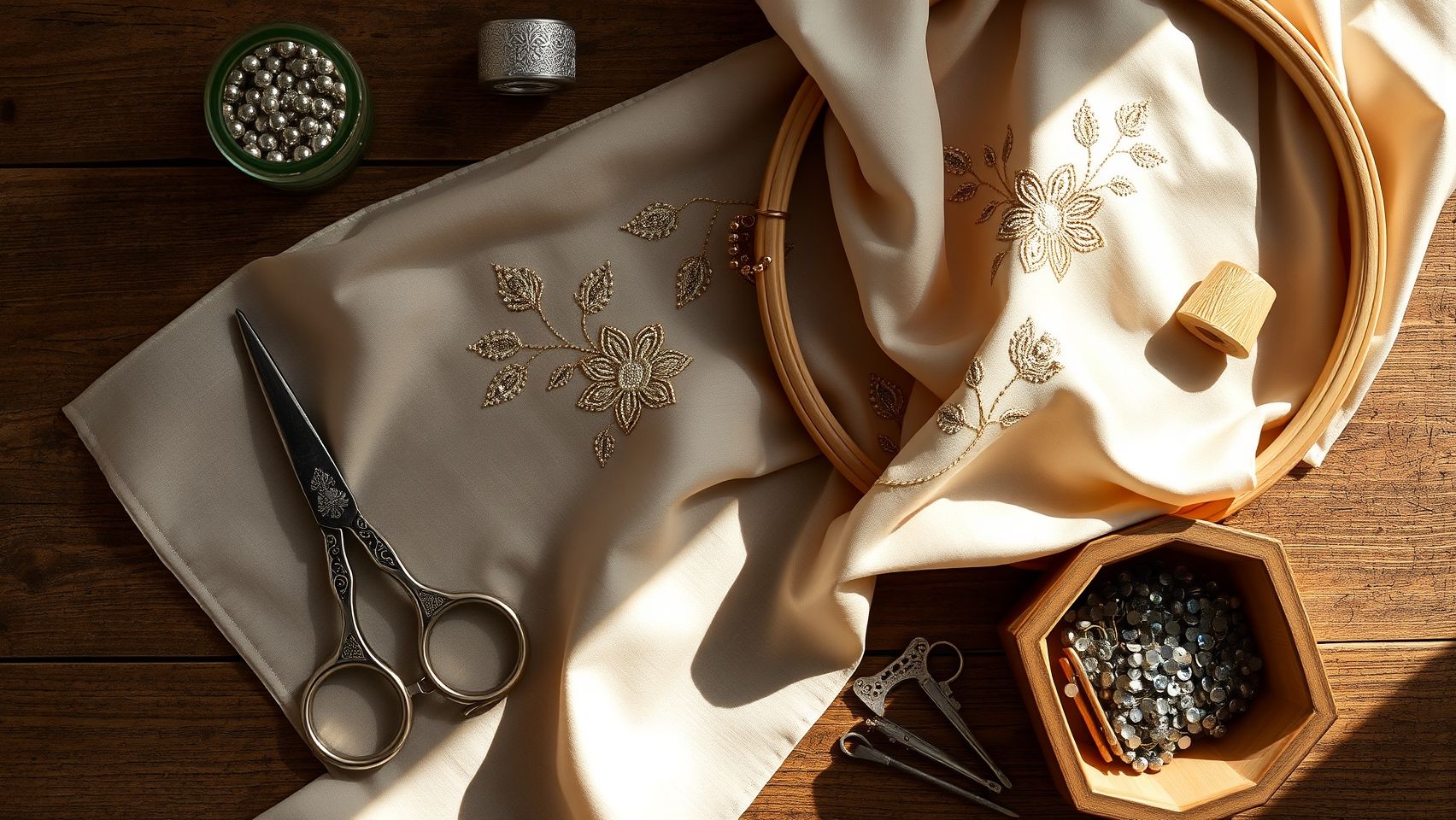
| Silk organza | A see-through ground for practising chain stitch and planning beading. | Confirm silk content, colour and actual cut dimensions. Do not assume every “organza” result is silk. | Browse silk organza |
| Tulle / fine net | Sheer beading samples and appliqué panels when the mesh suits the design. | Test stretch, hole size and bead support. Fine-looking bridal net is not automatically stable in a frame. | Browse fine tulle / net |
| Cotton organdy | A sample option if you want a fine cotton ground. | Ask for a swatch. Finish, stiffness and price vary; organdy is not always the least expensive choice. | Browse cotton organdy |
| Silk habotai / china silk | A smooth garment fabric to sample after you can control the hook. | Weight and colour affect transparency. Check the actual cloth instead of assuming all habotai is opaque. | Browse silk habotai |
| Fine linen / cotton lawn | Chain-stitch work on an opaque ground once the technique feels familiar. | Test the specific weave with your hook. Cotton and linen are possible grounds, but a successful organza sample does not prove this fabric will behave identically. | Browse linen / cotton lawn |
What about polyester organza? It can be a practice option. Maker Kat Klebenow’s tambour supply guide allows polyester while preferring silk. Compare a small sample with your hook; do not treat a low price as proof of suitability.
Fabrics to avoid
For your first sampler, put aside stretchy jersey, fuzzy surfaces and cloth that repeatedly snags with your hook. This is a learning shortcut, not a permanent ban. Experienced stitchers can use a much wider range of grounds, as the Threads introduction to tambour embroidery explains.
Before committing a garment, stitch a short straight line and curve on a scrap, add a few of the intended beads, then release the sample from the frame. Look for enlarged holes, puckering, sagging and thread snags. If it fails, try another ground or simplify the design before buying more supplies.
Frame and tension matter as much as the fabric
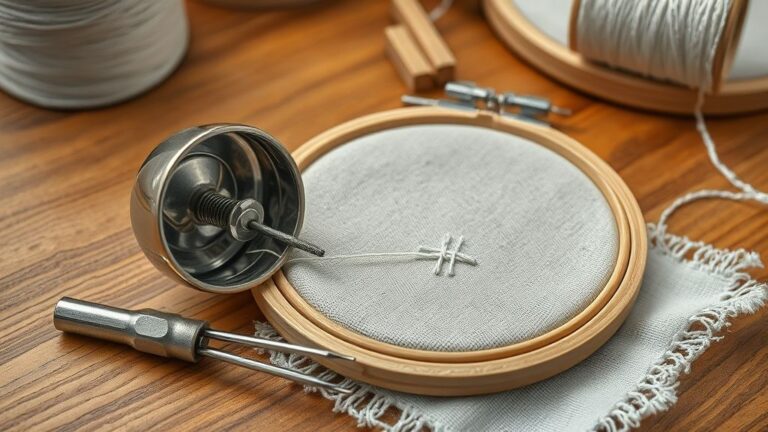
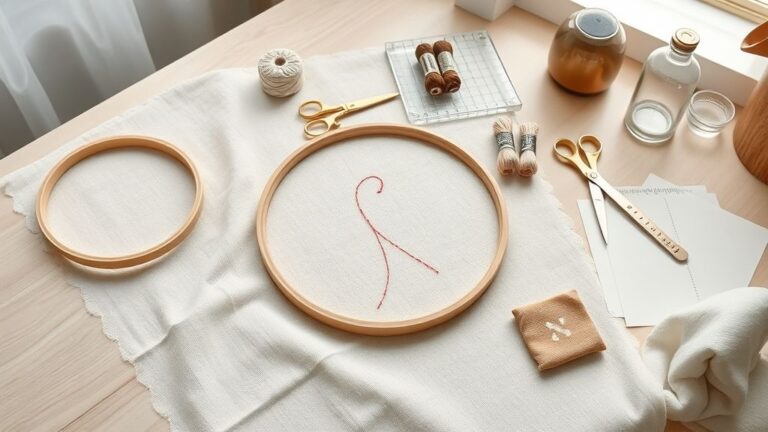
You need both hands available: one works the hook and the other feeds the thread below. A firmly mounted embroidery hoop with a clamp or stand can do that. A slate or tambour frame is an option for larger work, not a compulsory first purchase. Kat Klebenow’s guide describes both a clamped hoop and a slate-frame upgrade.
Use the hoop you already own if you can secure it and keep the ground taut. Allow enough extra cloth outside the working area for a firm grip; do not buy a cut exactly the size of the opening. For the stitching sequence, follow our tambour embroidery guide, and see our hoop and frame guide for sizing considerations.
Adding net behind an opaque fabric will not make the face fabric see-through. Treat backing and mounting as a separate sampling decision; extra layers change how the hook passes through.
Editorial guidance checked against the linked embroidery teaching sources on September 6, 2026. Fabric recommendations are based on those sources and project-selection considerations, not hands-on tests of the Amazon search results.
Frequently Asked Questions
What is the best fabric for tambour embroidery?
For a first practice piece, non-stretch silk organza is a useful starting choice because you can see the thread beneath it. The best ground for a finished piece depends on the design, bead weight and how the fabric behaves in your sample.
Can you do tambour embroidery on cotton?
Yes. Cotton is not ruled out by the technique. Start with a scrap of the actual fabric and check that the hook and thread pass through cleanly. An opaque ground takes more practice because you cannot watch the thread-feeding hand through the cloth.
Do you need a special frame for tambour embroidery?
No. A hoop secured in a suitable stand or clamp can leave both hands free. Choose a larger frame when the size or mounting requirements of the project call for it.
Can you do tambour beading on stretch fabric?
Stretch makes tension harder to control, so it is not our first-sampler recommendation. One option to investigate is beading a stable sheer panel and attaching it to the garment. Sample the attachment and garment stretch before committing to a finished piece.